Back
Leading the Design of a B2B CRM Platform for Insurance Operations
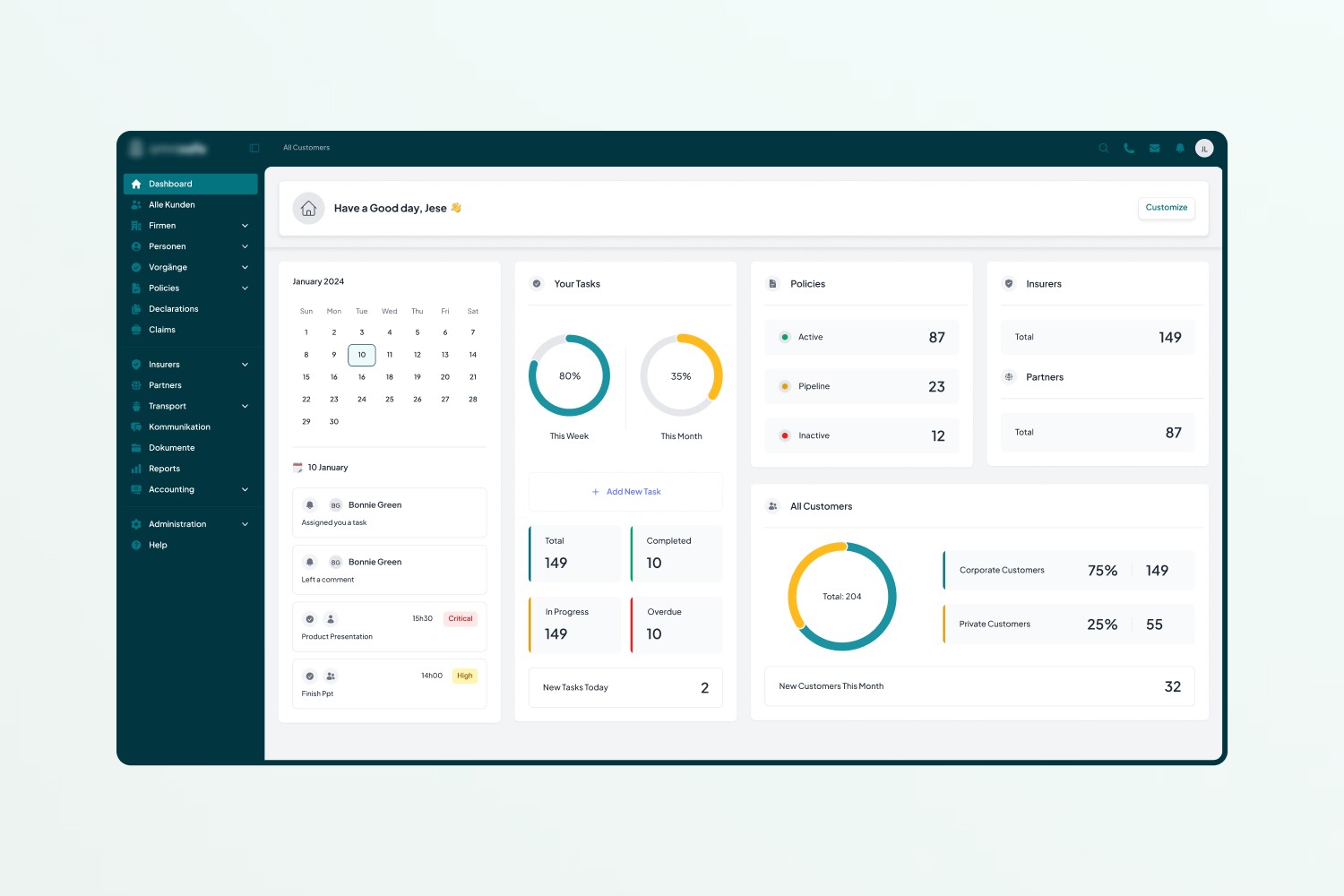
Omnisafe is a fintech startup rooted in over a century of insurance expertise, building a modern platform for insurance distribution and risk management powered by data and automation. As Product Designer and UX/UI Department Lead, I led the design of a scalable design system and conceptualized the company’s internal CRM platform to support their operational workflows and long-term product vision.
Lead Product Designer
Düsseldorf
2022
Insurance
1 - 20
Overview
Omnisafe required a centralized CRM platform to replace a fragmented set of legacy tools used for managing insurance policies, client data, appointments, and internal communication.
The goal was not only to modernize the interface, but to consolidate operational workflows into a single system that could support day-to-day work across departments — while remaining accessible to employees transitioning from outdated terminal-based systems.
In addition to improving usability, the platform needed to support future scalability across regions and operational environments, which introduced requirements around modularity, system consistency, and multilingual deployment.
Challenges
The existing workflow relied on multiple disconnected tools that introduced friction in everyday operations such as policy tracking, client management, reporting, and scheduling. Employees often had to switch between systems to complete routine tasks, resulting in inefficiencies and increased cognitive load.
At the same time, the primary user base consisted of long-time employees accustomed to legacy software, which meant that any new solution needed to be immediately understandable without requiring extensive onboarding.
From a product perspective, the platform also had to be designed in a way that could:
scale across internal teams and operational regions
maintain consistency across a growing feature set
support localization for future market rollout
and reduce engineering effort required to maintain or expand the system
This positioned the project as a platform design challenge rather than a visual redesign effort.
Role & Process
As the lead designer on the project, I was responsible for:
defining the platform’s information architecture
establishing the design system
designing core workflows and module interactions
creating high-fidelity prototypes
validating usability with internal users
and collaborating closely with engineering teams during implementation
Regular feedback sessions with stakeholders and end users informed iterative improvements throughout the process, ensuring that the final product balanced operational complexity with ease of use for non-technical staff.
16
Modules
100%
Design System Utilization
20
Design System Libraries
Solution
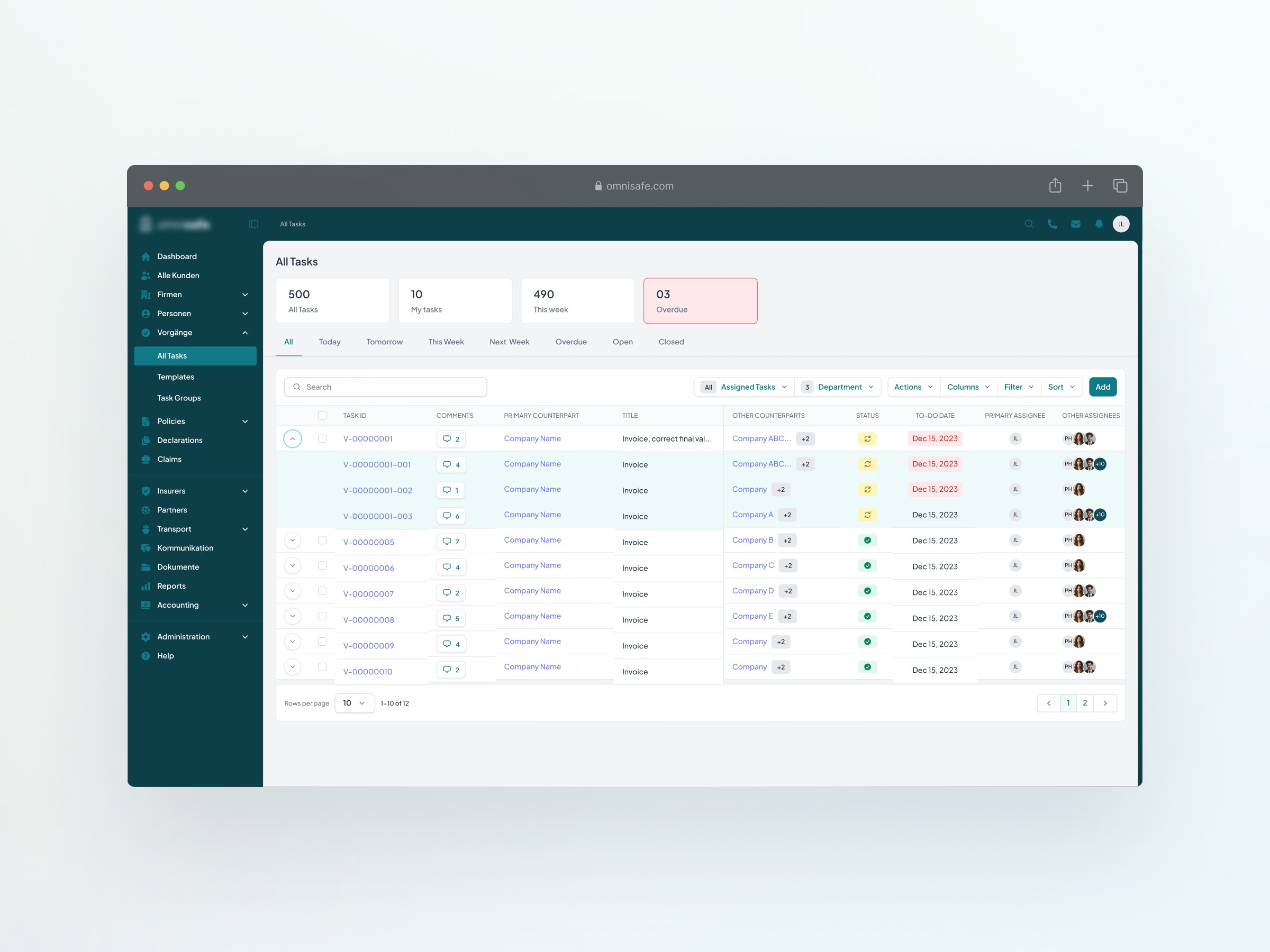
We designed a modular CRM platform consisting of 16 interconnected functional modules covering:
client and policy management
appointment scheduling
internal communication
reporting
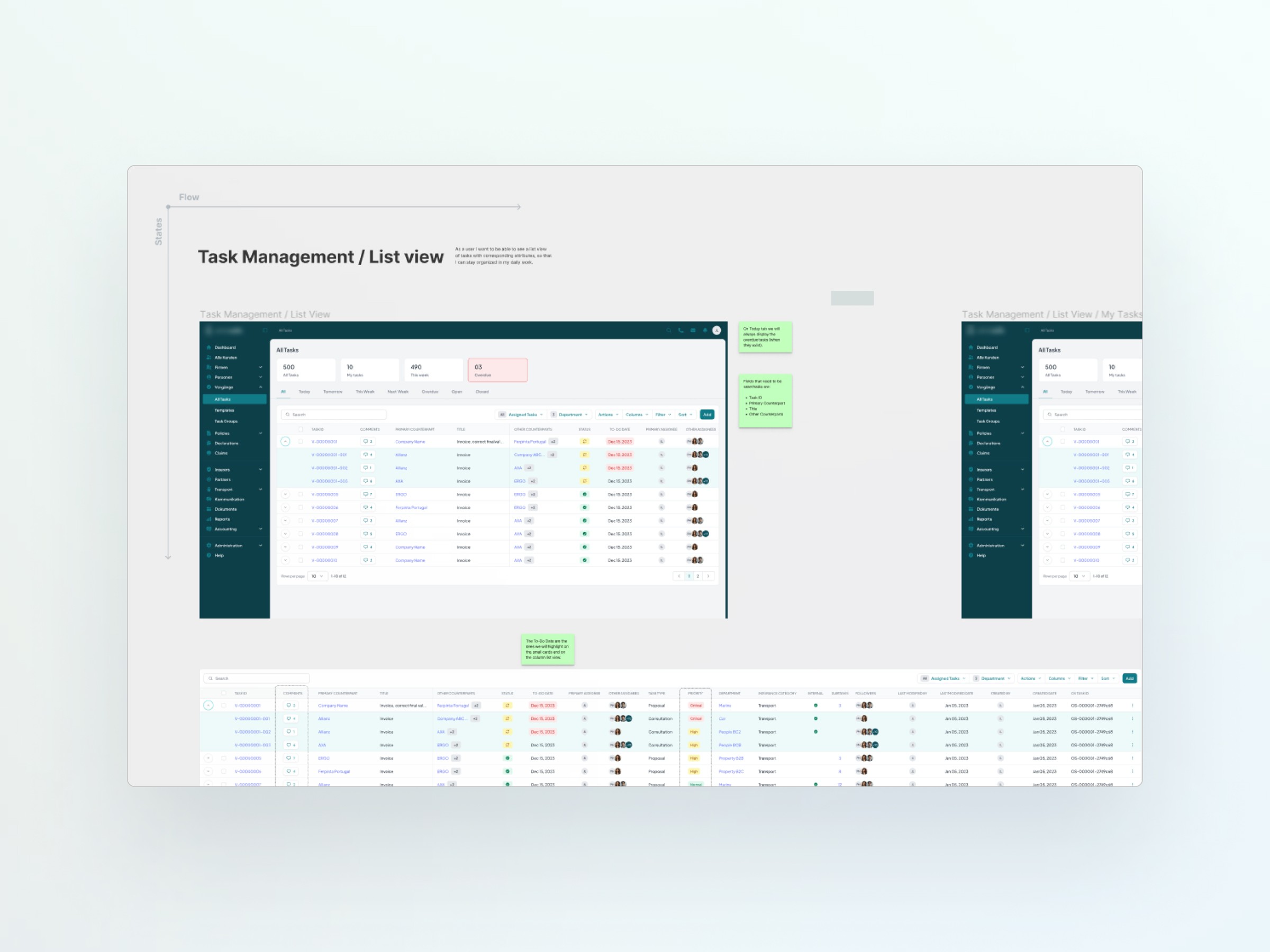
and operational task tracking
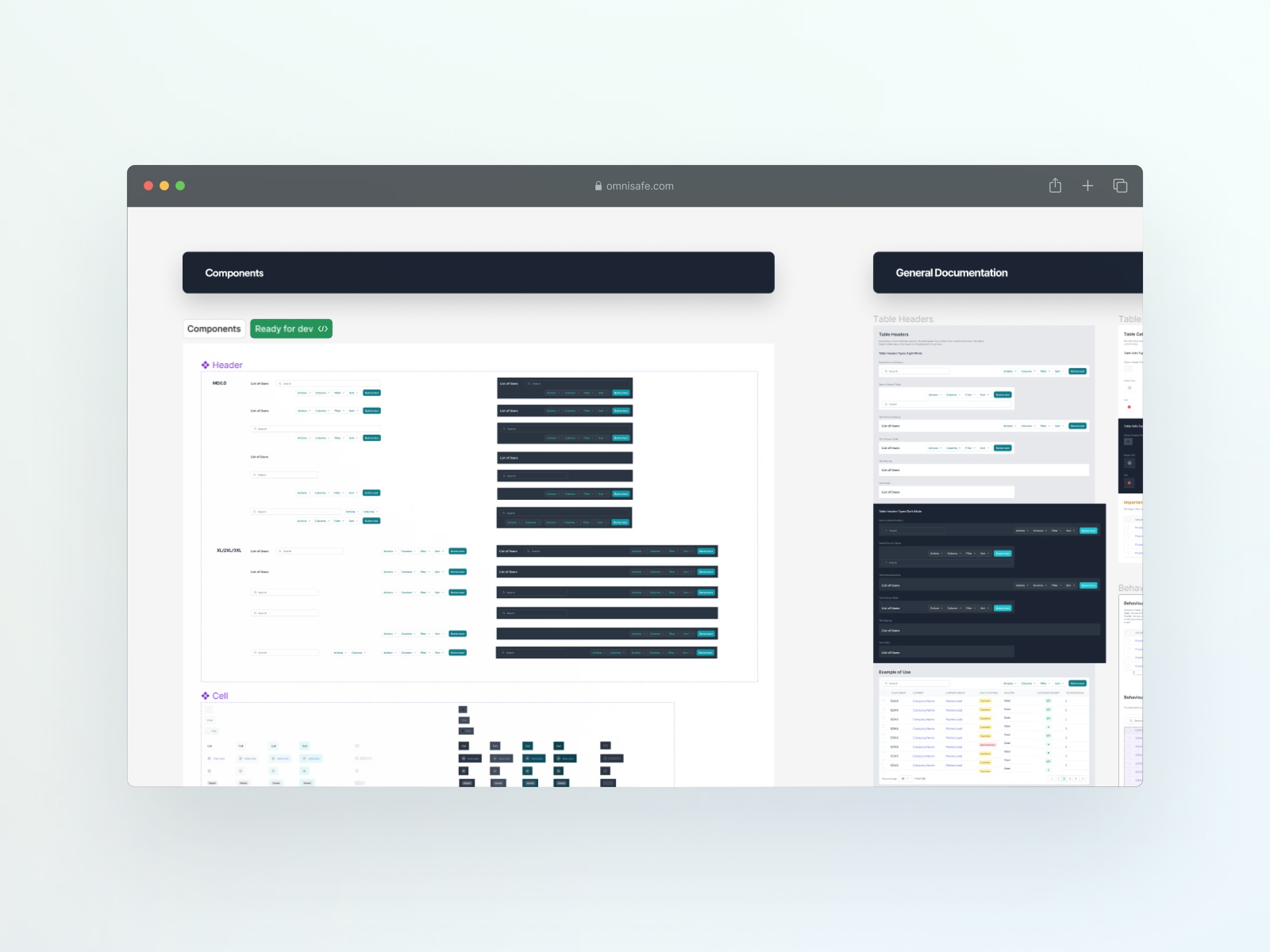
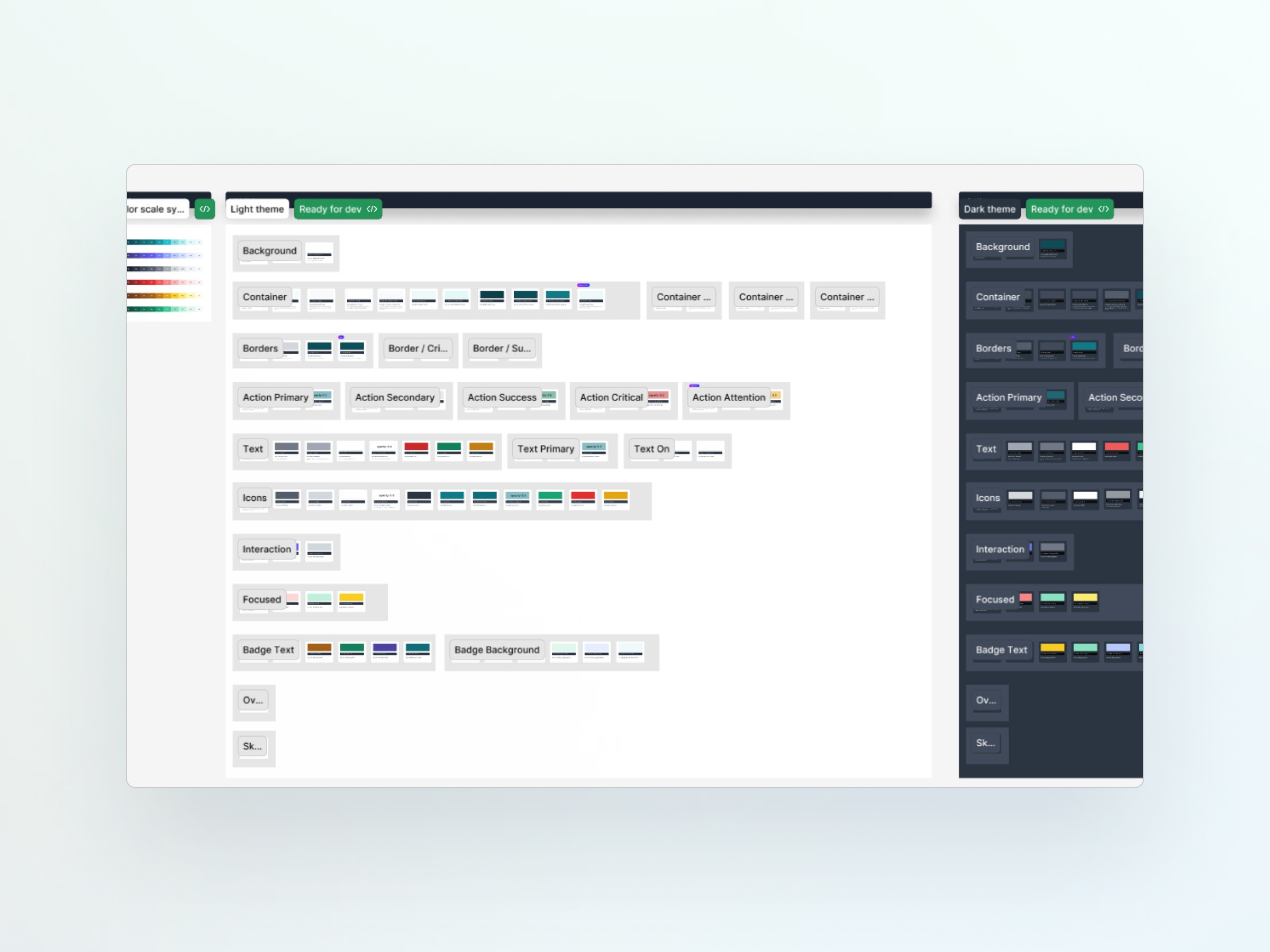
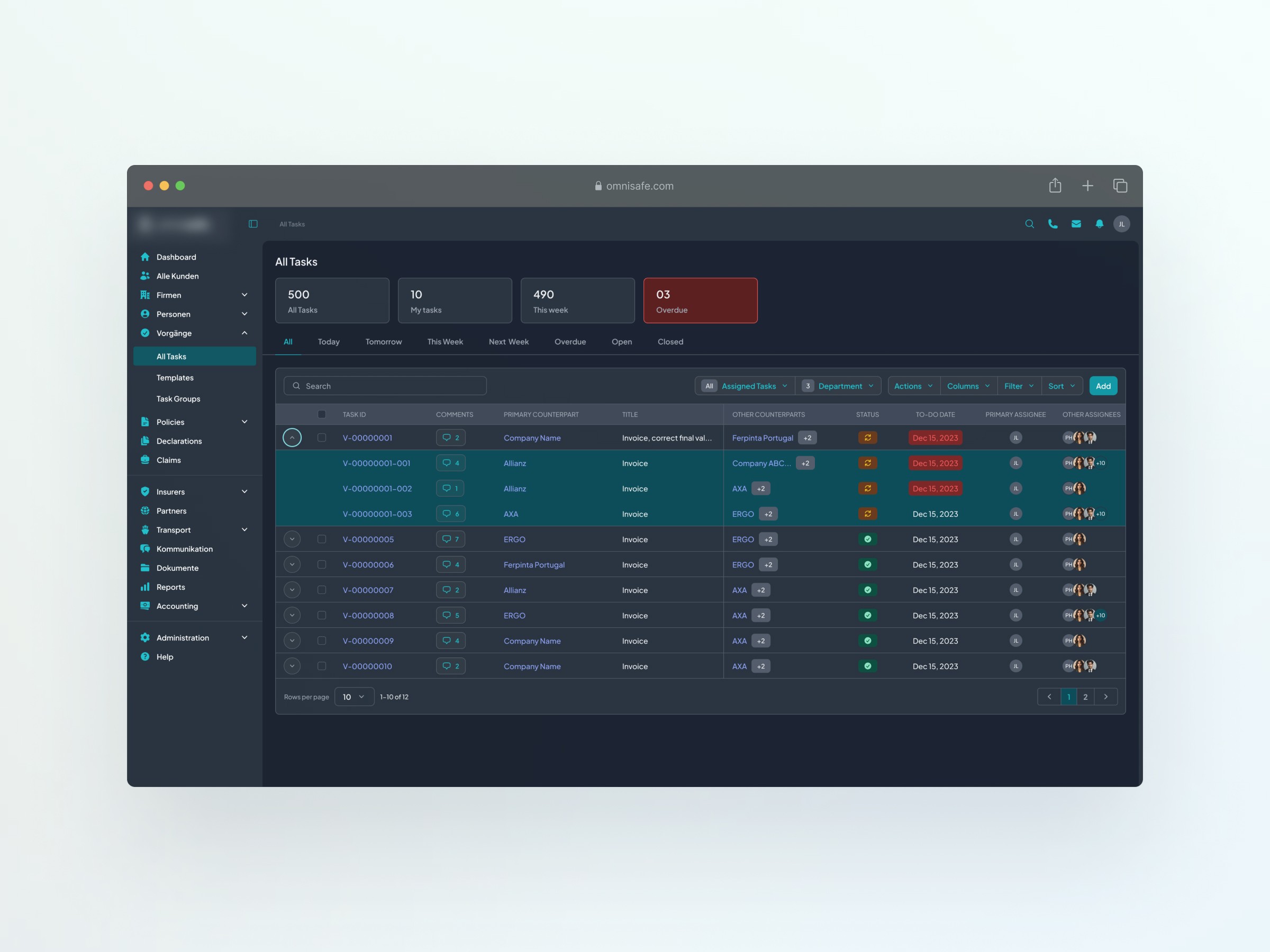
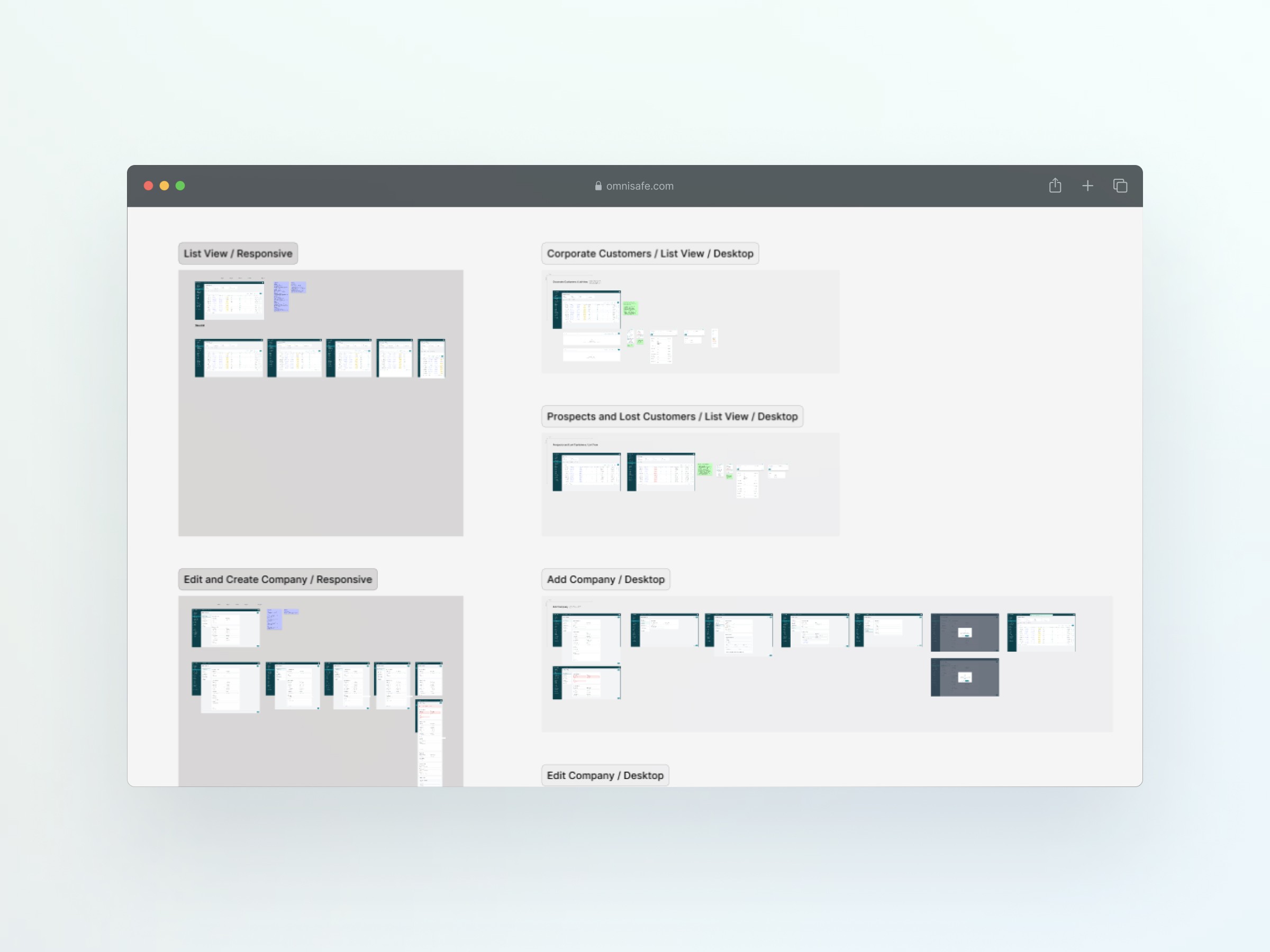
A core design system was established early in the process to ensure consistency across all modules and allow new features to be implemented without fragmenting the interface.
Figma served as the structured source of truth for UI components, layout patterns, and design tokens — enabling tighter alignment between design and engineering throughout implementation.
As the platform evolved, we introduced a localization workflow using Phrase to support multilingual deployments across operational regions. All user-facing interface content was externalized and mapped to translation keys directly from the design layer, allowing backend teams to dynamically inject translated content at runtime without altering the interface structure.
This design-to-development pipeline enabled:
separation of UI structure from content
consistent implementation across modules
reduced manual effort when introducing new languages
and faster rollout of the platform across different regions
By aligning the design system with the localization infrastructure, the CRM was able to scale operationally while preserving usability and visual consistency — laying the groundwork for potential expansion beyond internal company use.
Outcome
The resulting platform replaced multiple legacy tools with a unified system that streamlined policy management, reporting, and communication workflows.
Through modular architecture and integration with a localization pipeline, the CRM is now positioned to support multilingual deployments and operational expansion without requiring redesign of existing interface components.
Integration with Phrase enabled the platform to support multilingual deployments without introducing UI inconsistencies or increasing engineering overhead, allowing Omnisafe to expand across regions without redesigning existing modules.
Results
The final CRM tool significantly improved efficiency and user satisfaction at OmniSafe. The modernized interface made it easier for older employees to manage their tasks, leading to better overall performance for the company. The successful implementation of the design system ensured a cohesive and intuitive user experience across the platform.